Meta Connect 2026: Meta Turned VR Into Glasses
No new Quest, a 100-gram VR headset that is really glasses, and camera-free AI glasses. The Meta Wars season finale: what Meta announced at Connect 2026 and what it means for anyone building with XR.
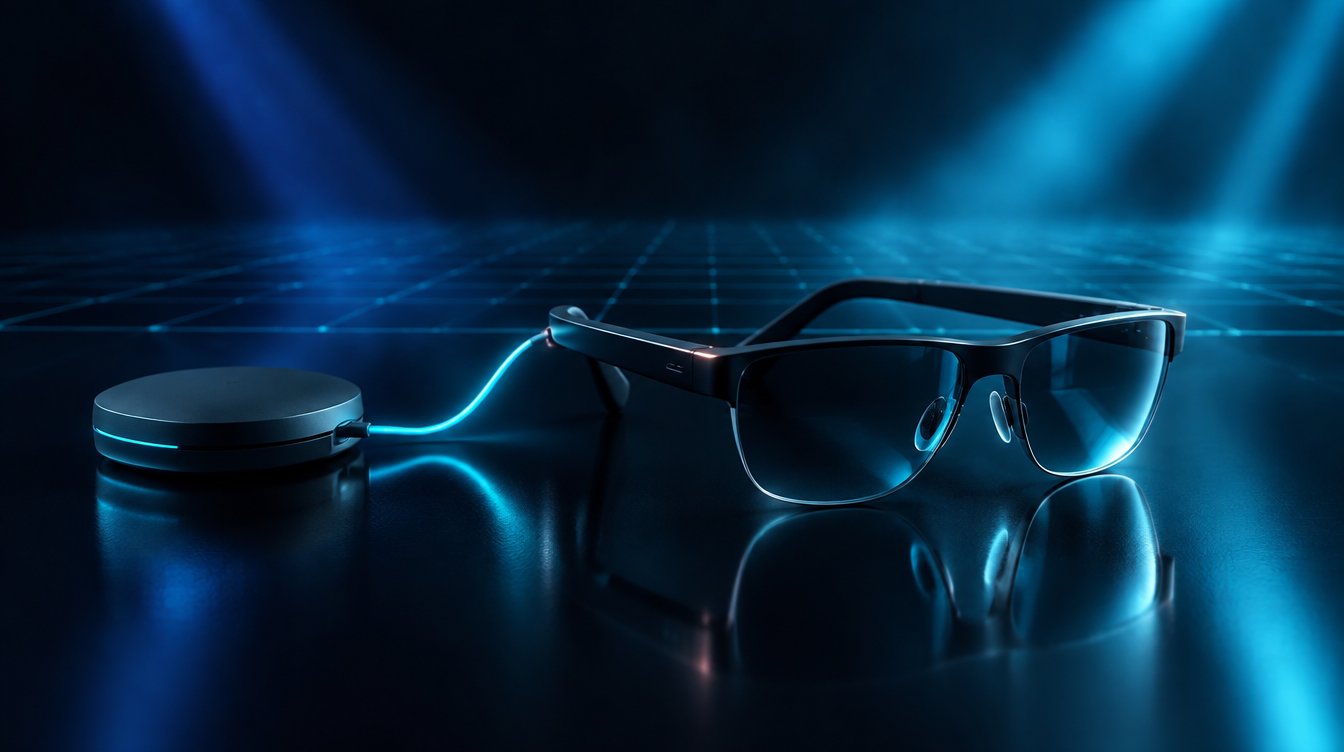
Meta walked into Connect 2026 without a new Quest. It walked out with a VR headset that isn't a headset anymore: Meta VR Glasses, about 100 grams on your face, $1,299.99, on sale spring 2027.
That one product closes the season of Meta Wars better than any recap could. Back in July we argued that Meta killed the metaverse to save the glasses. On September 23 it went further and turned VR itself into glasses.
What Meta actually announced
Meta VR Glasses (the device reported for months as Project Phoenix). About 100 grams on the face, micro-OLED at 37 pixels per degree, compute and battery moved into a pocket puck on an optical tether, Snapdragon Reality Elite inside. Meta pitches it as a cinema, a courtside seat, a workspace and a console, in that order. Up to three hours of media playback per charge. Hand, eye and voice input, no controllers needed. $1,299.99, spring 2027. Hologram Calling. A photorealistic, real-time version of you on video calls, and it works inside whatever app you already use, from WhatsApp to Zoom. Ships with the VR Glasses. Ray-Ban Meta Audio. Meta's first glasses with no camera at all. Audio and AI only. Ray-Ban Meta (Gen 3). Slimmer, longer battery, a new action button. Ray-Ban Display goes international. The UK, Canada, France, Italy and Germany. No new Display hardware, only software and new markets. Muse comes to the glasses. Meta's personal AI agent, which can act on what you're looking at, lands on AI glasses in the coming months. Plus a small pocket device, Muse Charm, with no details yet.And one thing that did not happen: no Quest news at all. No new model, no price change.
Season scorecard: what we called in July
Seven episodes, one question each. Here's how they held up after Connect.
Meta is betting on glasses, not the metaverse. Confirmed, loudly. Glasses in every price tier, and now VR packed into glasses too. Smart glasses are the next front. Confirmed. Meta now sells three capability tiers (audio only, camera, display) and is heading toward 100+ styles by year end. Valve is the wildcard. Also confirmed, from the other side. Steam Frame launched on September 14 at $1,059, nine days before Connect. When Meta VR Glasses arrive they will cost about $240 more than the base Steam Frame. The OS war matters more than the hardware. Still true, and Connect sharpened it. Meta's pitch wasn't about specs. It was an AI agent built into the operating system, and calls that run inside apps you already have. That's a platform play.What this means if you build with XR
We've been shipping XR for enterprise clients since 2015, so we read Connect as builders, not fans. Three things stand out.
Wear time is the real upgrade. Most failed VR training pilots don't fail on content. They fail at minute 20, when the headset gets heavy. A 100-gram device changes how long a session can run. Long onboarding modules, procedure walkthroughs and multi-screen work sessions become realistic. Hologram calling inside existing apps lowers the adoption wall. Nobody has to learn a new meeting tool. For remote expert support, sales demos and distributed teams, that matters more than any spec. Don't plan a fleet around it yet. It's spring 2027, the price came in $300 above what was reported in 2025, controllers are sold separately, and Meta has said nothing about enterprise device management. For projects running in the next six months, Quest 3 and 3S are still the practical fleet, and WebXR still reaches the most people with zero hardware.The rule from the whole series holds: goal first, then content, then platform. The giants will keep swapping places at the top. Your ROI shouldn't depend on who leads this quarter.
Season 2
The war now runs on three fronts at once: VR glasses vs Steam Frame vs Vision Pro on the face, three tiers of AI glasses on the nose, and AI agents inside the OS. Season 2 follows all three, starting with the first hands-on reviews of Meta VR Glasses.
Planning a training, marketing or event project and not sure which side of the war to build on? Talk to us. Picking platforms is literally our day job.
Part of Meta Wars, VR Express's chronicle of the fight for the next computing platform. Start with Galaxy XR vs Vision Pro: the $1,799 vs $3,499 fight.