👓 Smart Glasses 2026: The Next Front
Samsung opens the front most dangerous to the phone — smart glasses. Who stands where, the display vs no-display split, and what it means for business.
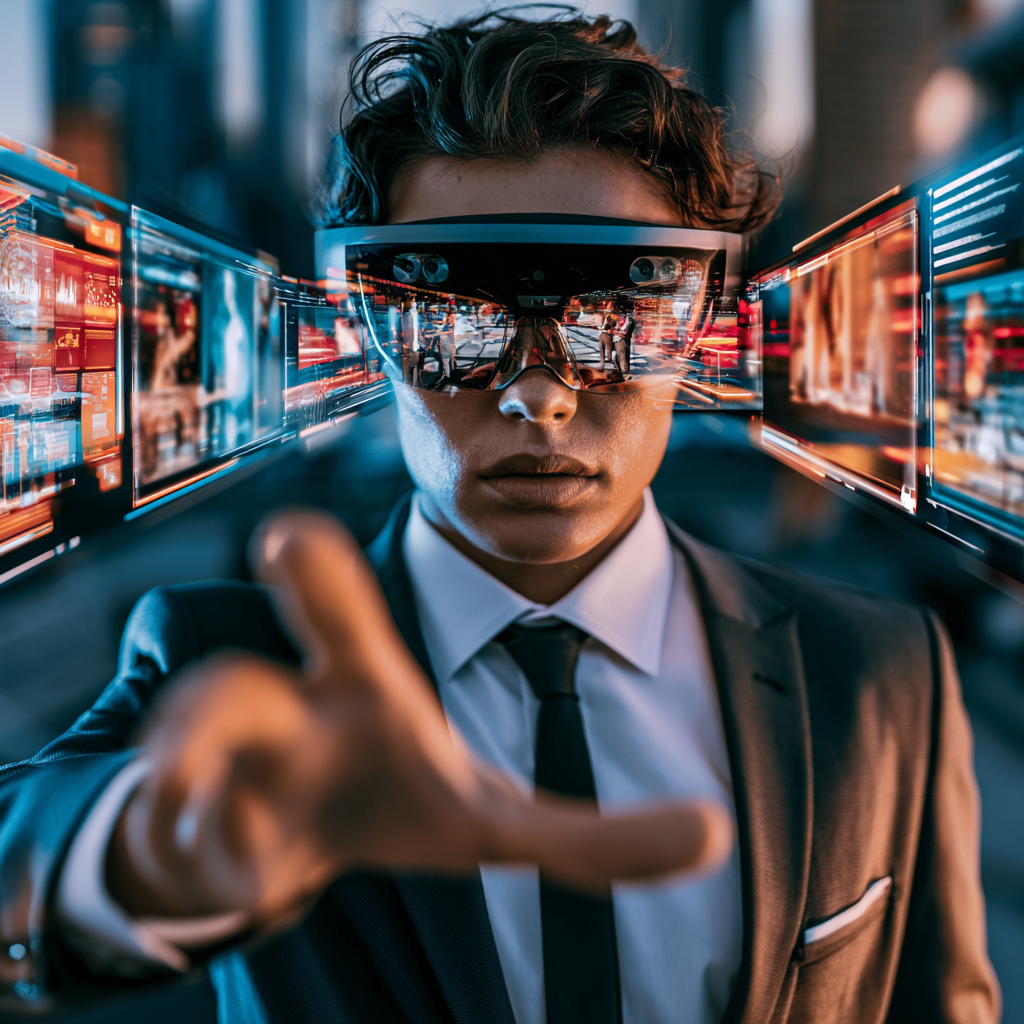
Until now, the war for the next computing platform has been fought on your head — with $1,799 or $3,499 headsets that you put on for a session and take off an hour later. But the real battle is for a device you never take off — one that weighs 40 grams and sits on your nose all day.
On 22 July in London, Samsung officially opens that front with Galaxy Glasses. And it's far more dangerous to the phone than any headset.
Meta Wars follows the war from the trenches: VR Express has built on every one of the warring platforms since 2015. Here is the honest read ahead of Unpacked — what we know, what is rumour, and why glasses, not headsets, are the form factor that could actually displace the smartphone.
_Written ahead of Samsung Unpacked (22 July 2026)._
Why glasses are the real front
A headset is for a session. Glasses are for the day. That's exactly the stake: the headsets from Episode 2 impress in a demo, but live in a drawer between uses. Smart glasses are worn like… glasses — and that changes the equation.
The market has noticed. Forecasts for 2026 point to more than 15 million units shipped and sharp double-digit growth over last year — the category has gone from niche experiment to a multi-front market. And leading it is a company that has already bet everything on glasses: Meta.
Who stands where before 22 July
Meta — the leader. Ray-Ban Meta and Oakley Meta sold the category before the competition showed up. Meta's positioning for five years has been clear: the camera you wear — capture, audio, social. This is the device everyone else is chasing. Samsung + Google — the challenger arriving on 22 July. Galaxy Glasses (codename Jinju) run on Android XR, and Gemini isn't a feature — it's the interface. No display on the 2026 model (the display version, Haean, comes in 2027), a 12MP camera, lighter than a flagship phone and — an important detail — pairing with iPhone too, not just Galaxy. The reported price is $379–$499: Samsung isn't undercutting Meta, it's matching it and betting on ecosystem and AI. The pitch mirrors Meta's — not the camera you wear, but the assistant you wear. Apple — the absent one. After hitting pause on the headset, Apple still has no glasses — reportedly not before 2027. On the fastest-growing front, the strongest player in consumer hardware is a spectator. The rest. Snap is building true AR at a high price, Xreal goes the "glasses plus module" route, and Xiaomi and Huawei are pushing in Asia. The front is already crowded.The fault line: glasses with and without a display
This is the line that separates 2026 from 2027. This year's models — Galaxy Glasses Jinju, Ray-Ban Meta — hear and see, but can't show you anything. The answer is a voice in your ear or a summary on your phone. That's enough for real-time translation, navigation and questions to an AI — and a surprising number of other things.
Display glasses (Samsung Haean in 2027, Meta's display models) add a HUD in front of the eye — visual information overlaid on the real world. That's the AR everyone is waiting for. But it costs more power, more weight and more money. In 2026 the bet is simple: how useful are glasses without a screen?
What to watch at Unpacked
Three signals will tell whether this is a real platform moment or a press event:
- The price. Matching Meta ($379–499) or aggressively undercutting? Price decides whether Samsung is chasing volume or margins.
- Cross-platform. Does the companion app land on the App Store on launch day, or is iOS "coming soon"? That's the test of whether "works with iPhone" is reality or a slide.
- Business controls. Is there any word on enterprise management, privacy and an SDK? Without them, the glasses remain a consumer toy.
What this means for business
Let's be direct: consumer AI glasses in 2026 are not an enterprise AR solution. For training 50 people, product visualisation or an event activation, a headset or WebXR does the job today — glasses don't yet.
But the trajectory is real. Hands-free access to information in the field, remote assistance, retail — that's where glasses will land first. And here comes the warning for our clients in banking, pharma and law: a device with an always-on camera and microphone that sends what it sees to an external AI is a very concrete compliance question, not an abstraction. The LED indicator doesn't answer what happens to the footage — and regulators and legal departments will ask exactly that.
The practical move now: watch Unpacked, but don't buy a fleet. Pilot small, measure ROI, pick a platform by goal — not by hype. That's exactly our day job.
The giants are fighting for your eyes. We make sure your business wins from the fight. 👓
Next in Meta Wars: what the XR war means for business — how the price war and the platform split become concrete opportunities.
Part of the Meta Wars series — the chronicle of the war for the next computing platform.